
By Charlotte Owen
Communications Officer
There are about 56 species of orchid native to the UK and 23 of those can be found across Sussex Wildlife Trust’s nature reserves.
These are some of the best reserves to visit in search of beautiful and elusive wild orchids. Click here for handy guide to some of the commonly seen orchids in Sussex.
Ditchling Beacon

This downland nature reserve is one of the highest points on the South Downs with fantastic panoramic views. It’s also our most orchid-rich nature reserve, with ten species found here. Alongside many of the more common orchids, look out for two rarities – the Musk Orchid and Marsh Fragrant-orchid. Searching for Musk Orchids is a challenge though – they are small and difficult to see even in the short sward, and they are mostly found on the steepest slopes.
Find out more about this nature reserve.
- Early Purple Orchid
- Common Twayblade
- Common Spotted-orchid
- Fragrant Orchid
- Greater Butterfly-orchid
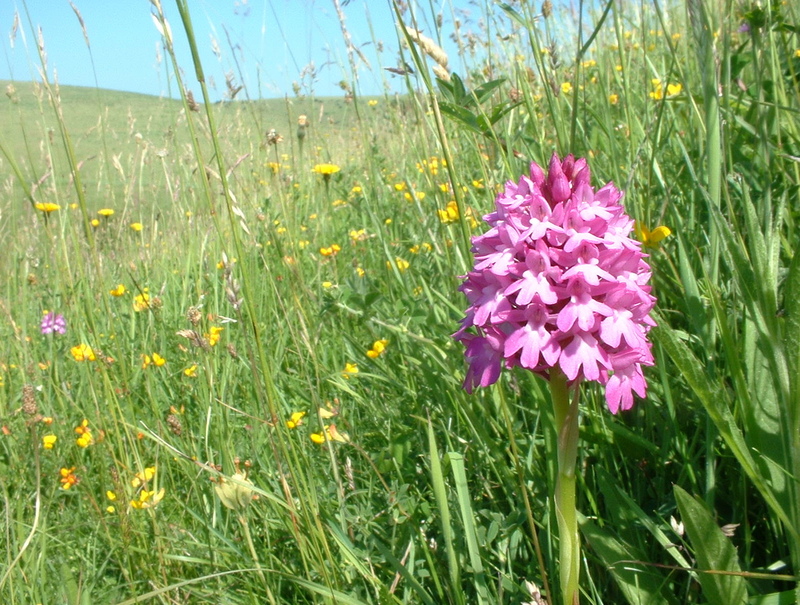
- Pyramidal Orchid
- Marsh Fragrant-orchid
- Musk Orchid
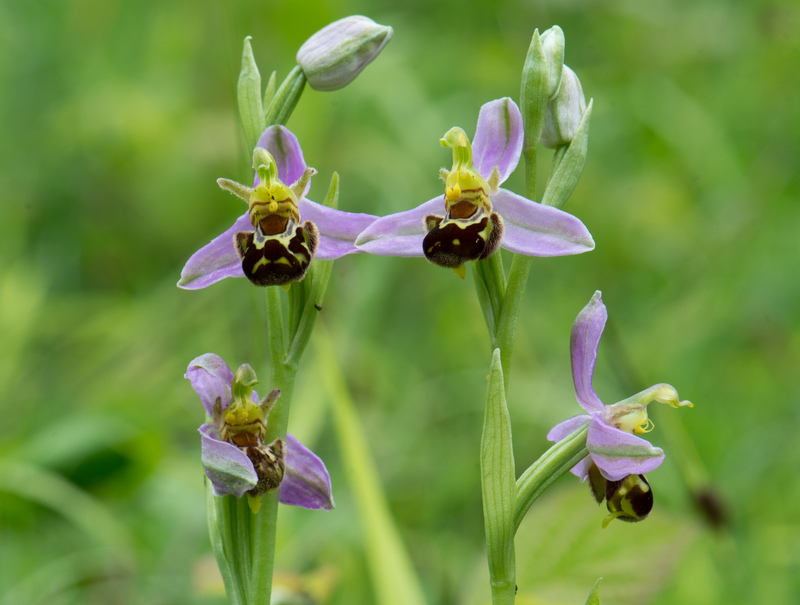
- Bee Orchid
- Fly Orchid
Malling Down and Southerham Farm
These downland nature reserves are exceptional examples of chalk grassland habitat, located on the fringes of Lewes. Common Spotted and Fragrant Orchids are frequently seen in the early summer on the sheltered slopes of the northerly quarries. The rarer Musk and Frog Orchids are barely 5cm tall and harder to find. It’s also worth visiting the nextdoor Mount Caburn National Nature Reserve to see the largest colony of Burnt Orchids in the south.
Find out more about this nature reserve
- Early Purple
- Common Twayblade
- Common Spotted-orchid
- Fragrant Orchid
- Burnt Orchid
- Pyramidal Orchid
- Frog Orchid
- Musk Orchid
- Bee Orchid
Woods Mill

A selection of the more common orchids grow here. The Common Spotted-orchid gets its name from its leaves, which are green with many purple, oval spots. The highly perfumed flowers of the common spotted-orchid are particularly attractive to day-flying moths.
Find out more about this nature reserve
- Common Spotted-orchid
- Bee Orchid
- Early Purple Orchid
- Broad-leaved Helleborine
Seaford Head

This is the best place to enjoy spectacular views of the Seven Sisters and Cuckmere Valley and a fantastic site for wild flowers. Green-winged Orchids can be found within the golf course by the fairways in May.
Find out more about this nature reserve
- Early Purple Orchid
- Green-winged Orchid
- Common Twayblade
- Common Spotted-orchid
- Pyramidal Orchid
- Bee Orchid
Rye Harbour Nature Reserve

Hundreds of Pyramidal Orchids grow at the north end of Castle Water and this is one of the few sites in East Sussex where you can see Bee Orchids, which usually favour chalk soils in the West. However, the star orchid here is the very rare Marsh Helleborine. We have been looking after the population here for 30 years, making sure it isn’t shaded out by willows and Bramble. When the colony was first discovered there were just nine flower spikes but now there are more than 500. Thanks to the creation of more wetland habitat at Castle Water, a second colony of more than 100 spikes has also established.
- Pyramidal Orchid
- Common Spotted-orchid
- Bee Orchid
- Marsh Helleborine
Find out more about this nature reserve
When looking for orchids, it’s worth noting that they can be temperamental. They will sometimes appear one year but not the next, and numbers can vary. The species listed above have all been recorded on site but may not all appear every year.
A guide to the flowering times of some of the orchid species found on our nature reserves

This post is also available on Sussex Wildlife Trust website

