
By James Duncan
Learning & Engagement Officer
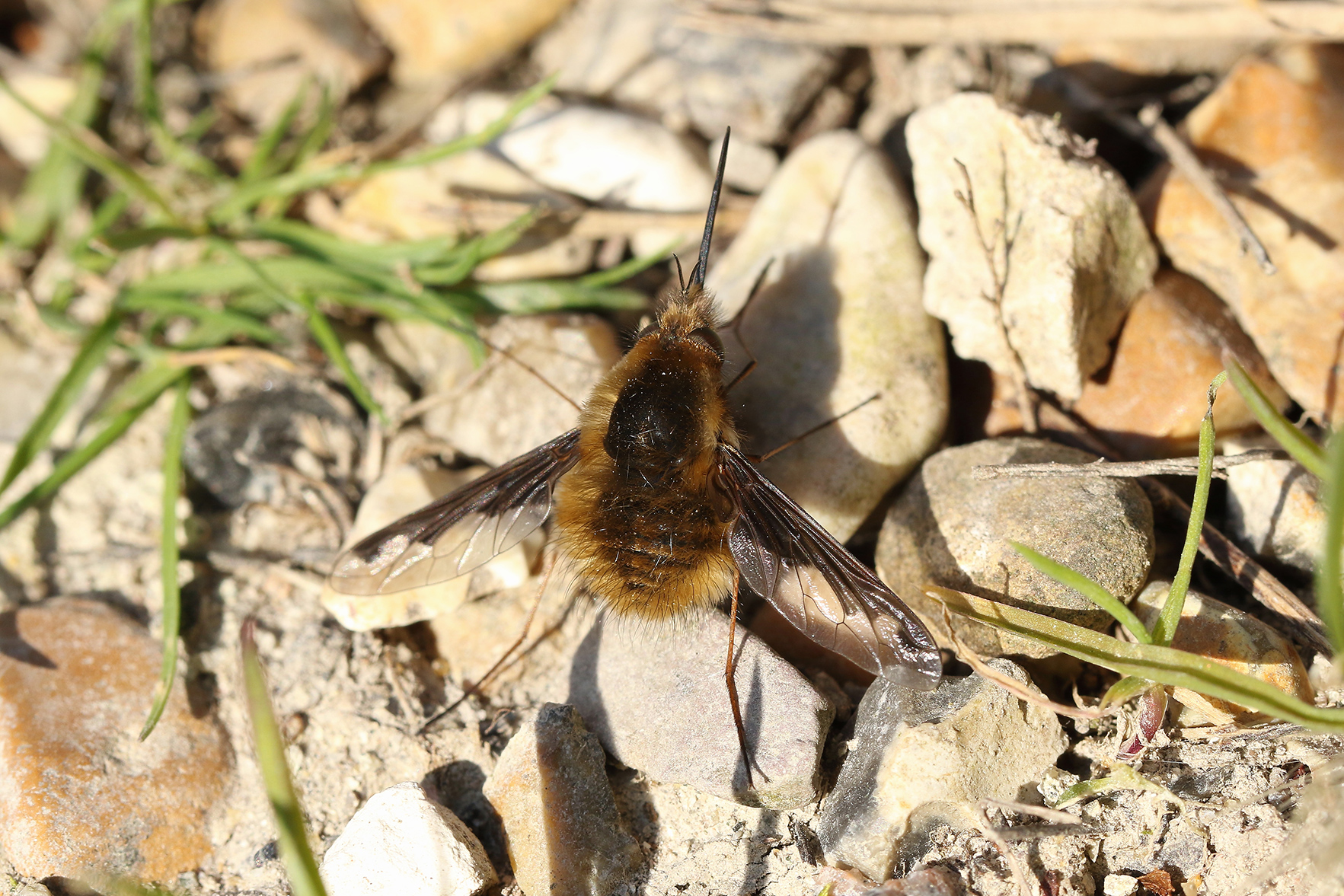
The Bee-flies have the fluffy, furry appearance of a Bumblebee. However, their name is partially misleading as they're merely impersonating bees and are comprehensively a Fly. They also sport what appears to be the insect-equivalent of a Narwhal tusk, though is in fact a proboscis (tongue) for sipping nectar as opposed to a weapon for impaling unsuspecting victims. There are four numerous UK species in the genus Bombylius, and the commonest of all is the Dark-edged (or Large) Bee-fly (Bombylius major). They're also some of the earliest flying insects, so now's the perfect time to keep an eye out as they make use of early spring flowers.
The Bee-flies are totally incapable of biting, stinging or harming humans but they do harbour a dark secret that belies their fluffy appearance - they're parasites of solitary bees. Their visual similarity to bees assists not only as protective camouflage but in their quest to reproduce and the devious method used. You may spot a Bee-fly 'sunbathing,' a time when females collect grains of dust and sand in their abdomens to mix with their eggs. Seems a strange plan, but the ploy is to add weight to the eggs and cover any indicators of her biological 'trojan horses.' She'll then undertake a bombing run, where with a flick of her abdomen the eggs will be launched into an unsuspecting solitary bee nest. Of course, this doesn't end well for the bees and when the bee-flies hatch, the larvae will eventually devour the bee grubs.
Their method of survival may seem gruesome, but it's important to consider these intricate relationships have existed in nature for an awful long time. There's no evidence to suggest that the parasitisation causes declines in solitary bee numbers. The Bee-fly (along with many other true flies) is in fact a useful generalist pollinator, visiting a wide variety of flowers from numerous plant families.

Bee-fly © James Duncan
This post is also available on Sussex Wildlife Trust website

