
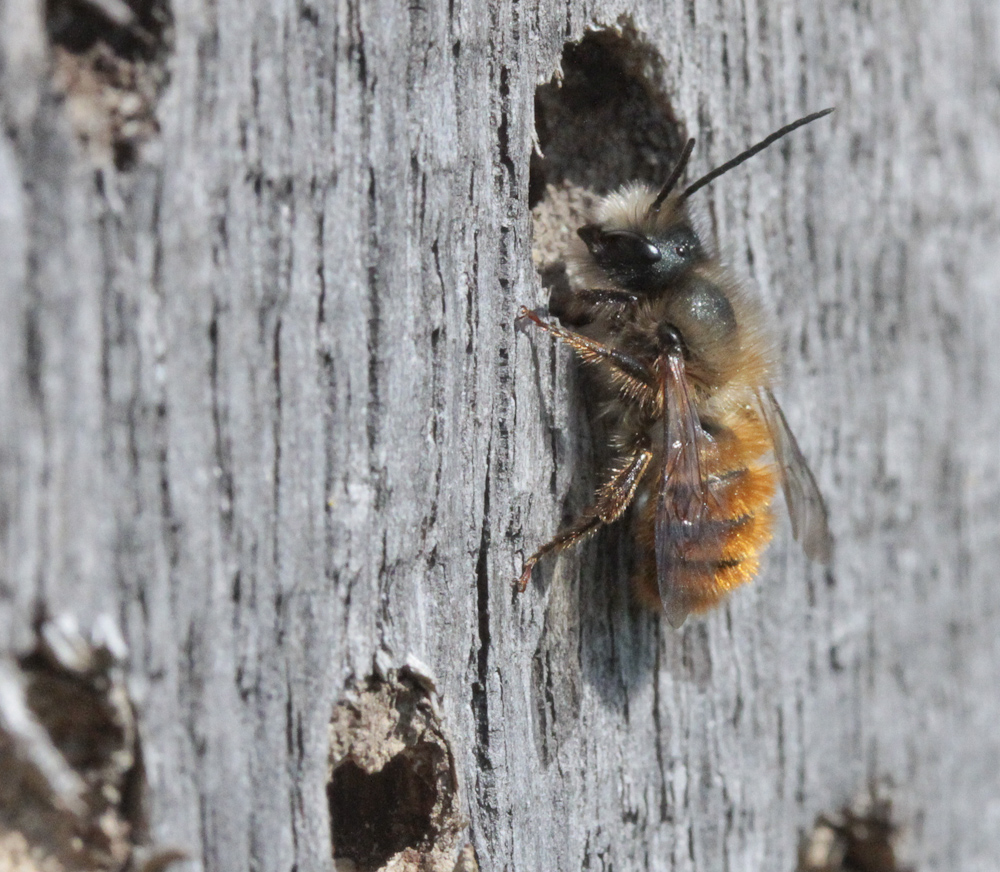
Here is a quick, simple, long-lasting and inexpensive way of creating a home for solitary bees. It took me 20 minutes and cost nothing.
Providing nesting holes for a few species of solitary bee will make it easy and interesting to observe them. You can do this anywhere in a sunny position and I use my windowsills.
All you need is a piece of wood at least 75mm thick, an electric drill and drill bits in a range of diameters from 3mm to 10mm.
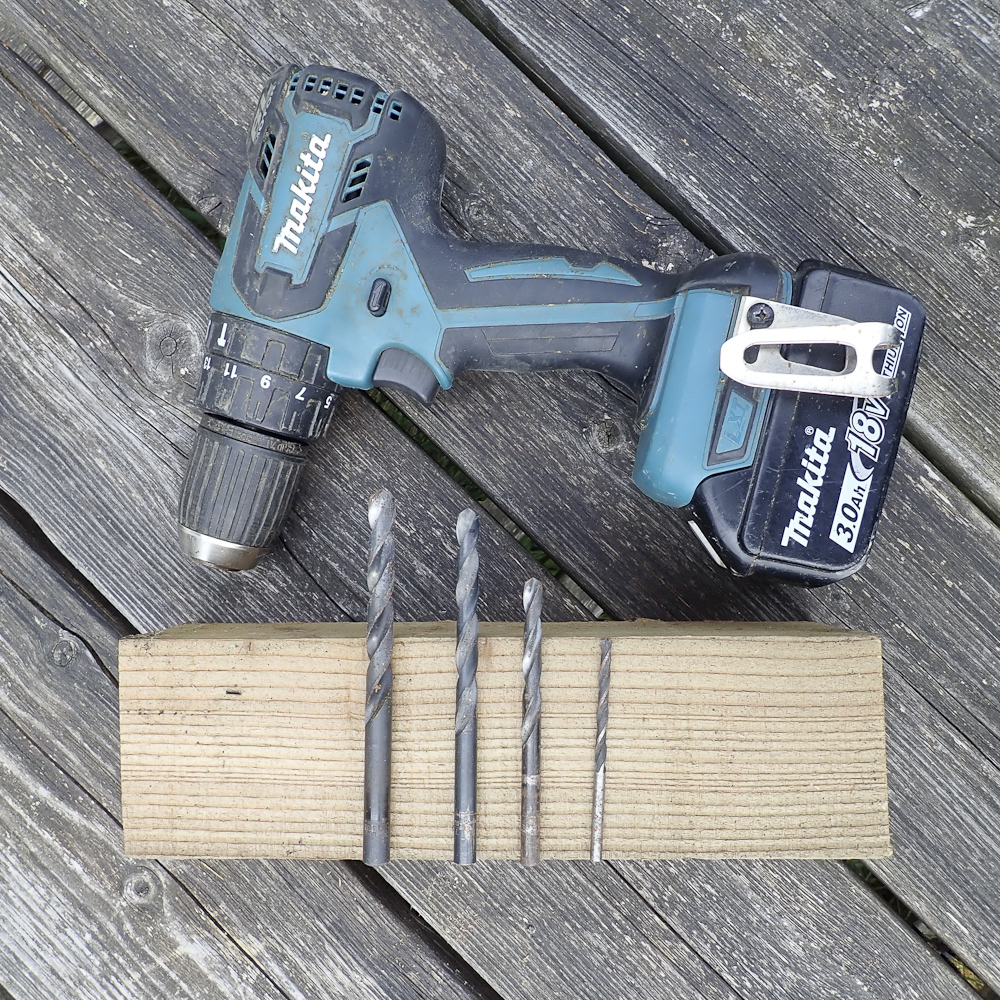
Making sure you are drilling in a safe place and that the wood is secure. Drill randomly placed holes into one side of the wood, as deep as you can, but making sure not to go right through, especially if you are doing it on your best garden furniture. Tidy up the holes a little with a penknife to get rid of large burrs that might obscure the hole.
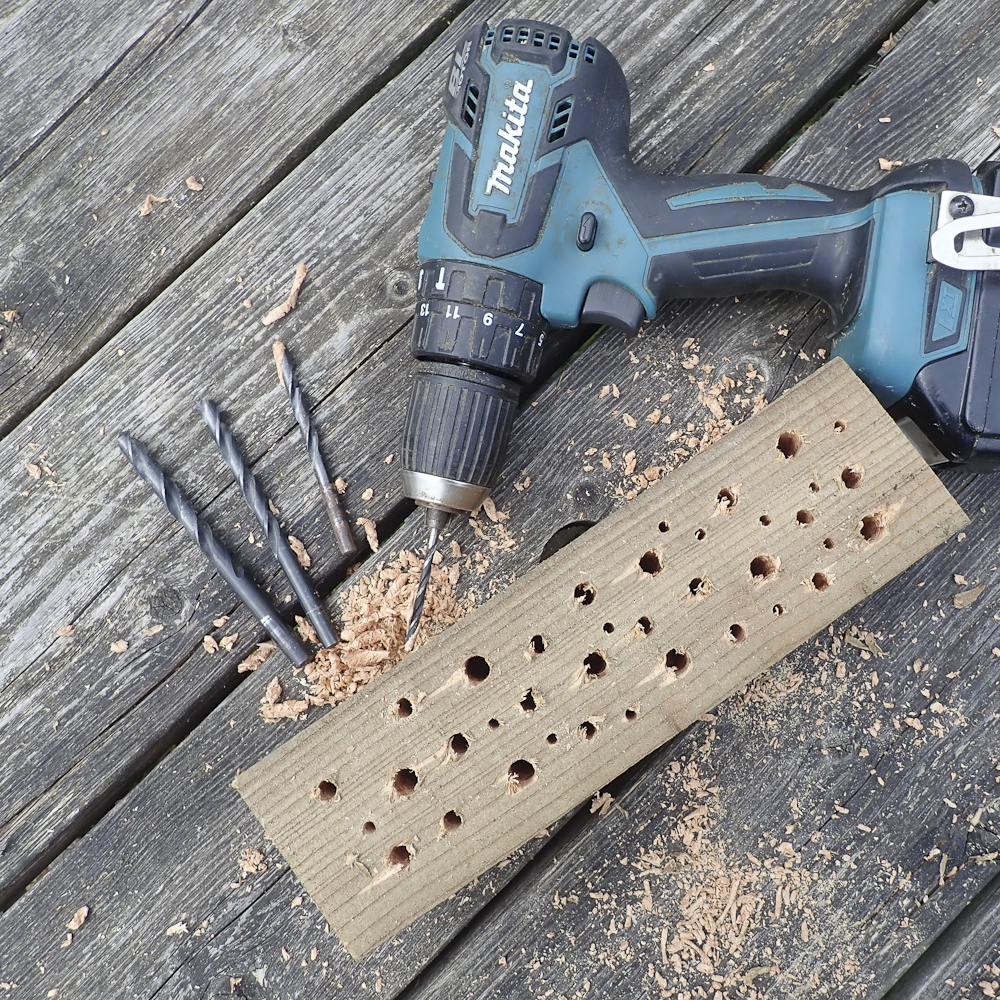
Then position the wood somewhere south facing in full sun. If you want to hang it up you will have to fix some string or wire to make a loop. For children you could write "BEE HOTEL" on it, but the bees don't need it. Stand back, admire your handywork and wait for some warm weather. Mine are placed on our porch windowsill, and there is the new one on top, just propped up with an old brick, but it does make it rather dark inside the porch!
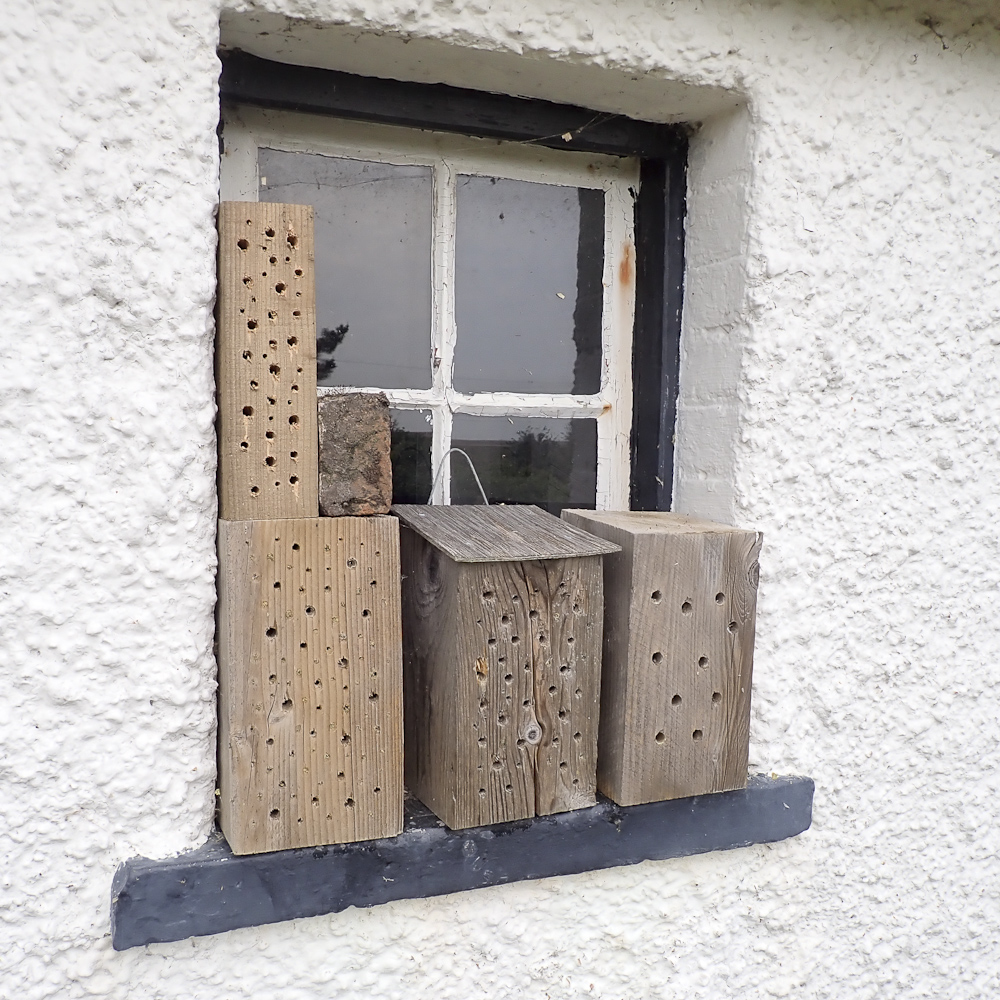
You could also drill holes into fence posts or other wood in a sunny location.
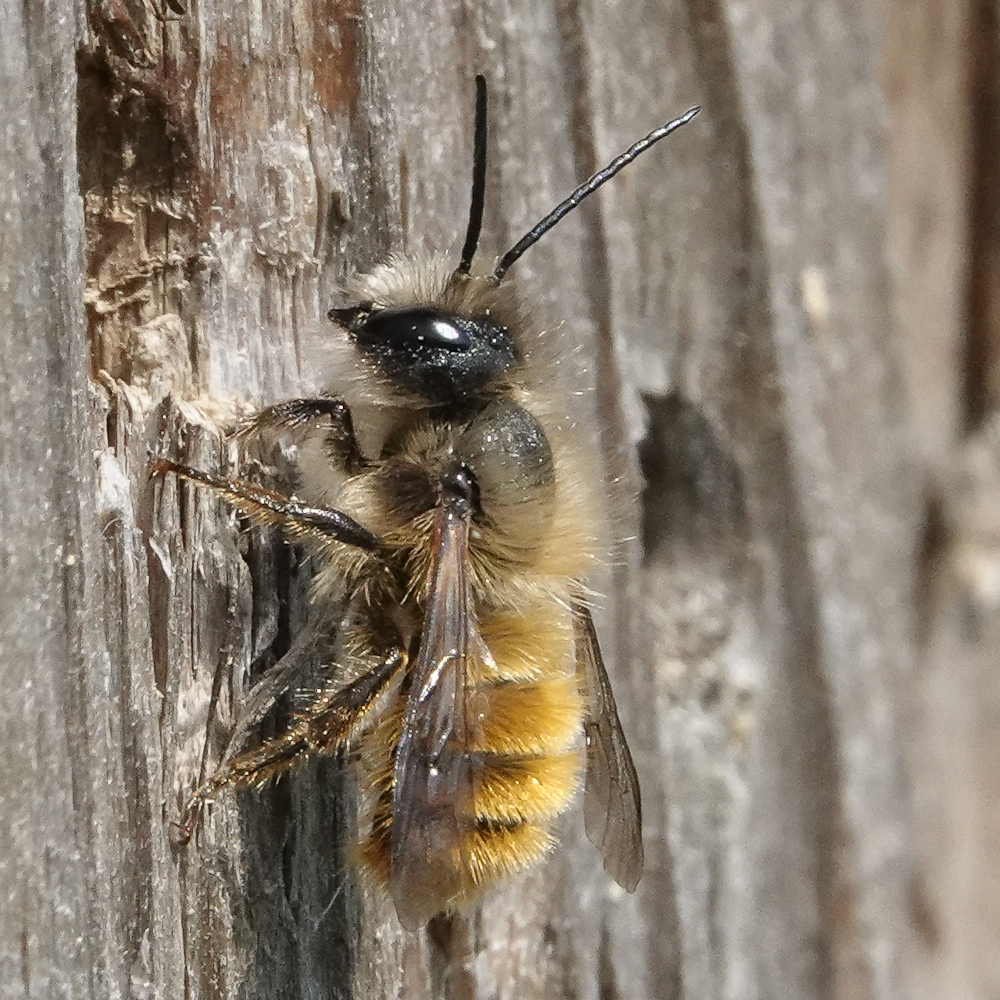
With a little luck you will get a variety of bees prospecting and then filling the holes with pollen or leaves to lay their eggs on. You can watch them very close, they don't mind and they will not sting you. Different species will prefer different sized holes - the 10mm holes are preferred by the Red Mason Bee (Osmia bicornis).
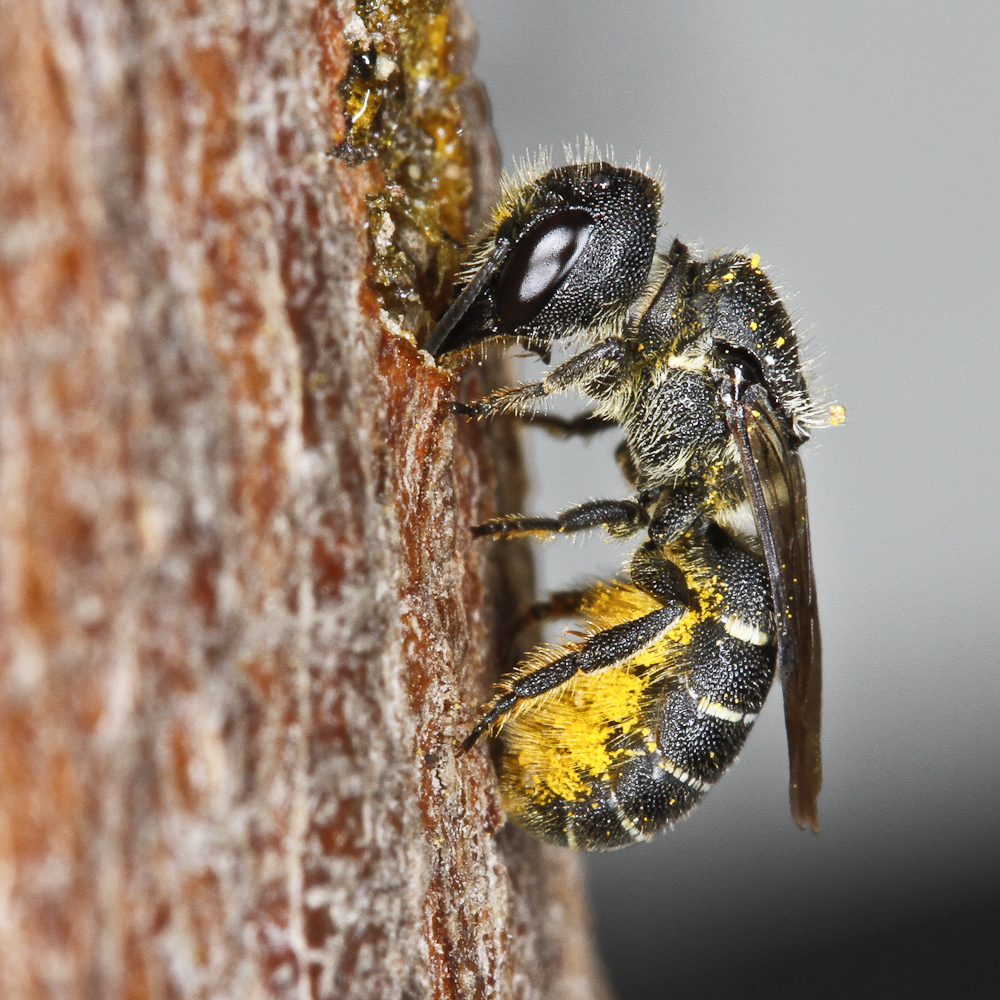
The 3mm holes are preferred by the Large Headed Resin Bee (Heriades truncorum) that plugs the hole with tree resin then armour plates it with grains of sand.
In time you can make more and more and build your colony up.
If you make one let us know how you get on.... Good Luck with making your first Bee Hotel.
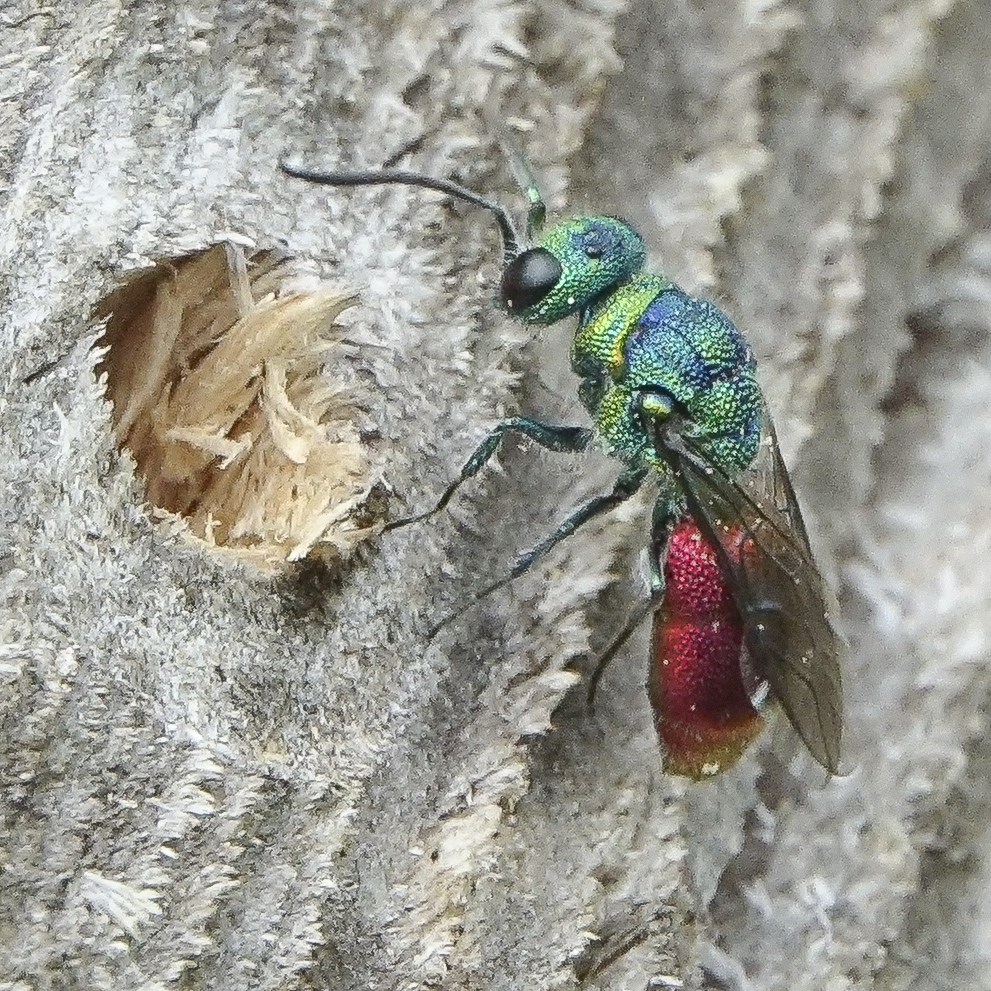
If you are very lucky you may get one of these Ruby-tailed Wasps that come to lay their eggs in the nests of the bees - not so lucky for them!
There are other ways of making Bee Hotels and places for mini-beasts to live.
https://www.wildlifetrusts.org/actions/how-make-bee-hotel
https://www.wildlifetrusts.org/actions/how-build-bug-mansion
Here is the Wildlife Trusts guide to solitary bees
https://www.wildlifetrusts.org/blog/ryan-clark/guide-solitary-bees-britain
This post is also available on Sussex Wildlife Trust website

