
By Chris Corrigan, CEO
Yesterday on a glorious autumn day I visited Rye Harbour to see for myself the extent and impact of the terrible plastic bio-bead pollution on our nature reserve. The realisation that hundreds of thousands, or more likely millions, of peppercorn-sized pieces of plastic have been spread across the precious saltmarsh habitat was a moment of deep despair.
It didn’t take me long, searching among the plants and the strandline of Sea Purslane leaves to realise the sheer scale of the clean-up operation. At the moment I am not sure how we will balance maximising the number of bio-beads we remove with the damage and disturbance that a large scale operation would cause. The muddy nature of the habitat means heavy equipment is almost certainly out of the question and large numbers of volunteers would cause significant disturbance to the flocks of wintering birds which come to the reserve from Northern Europe, Iceland, and Russia at this time of year.
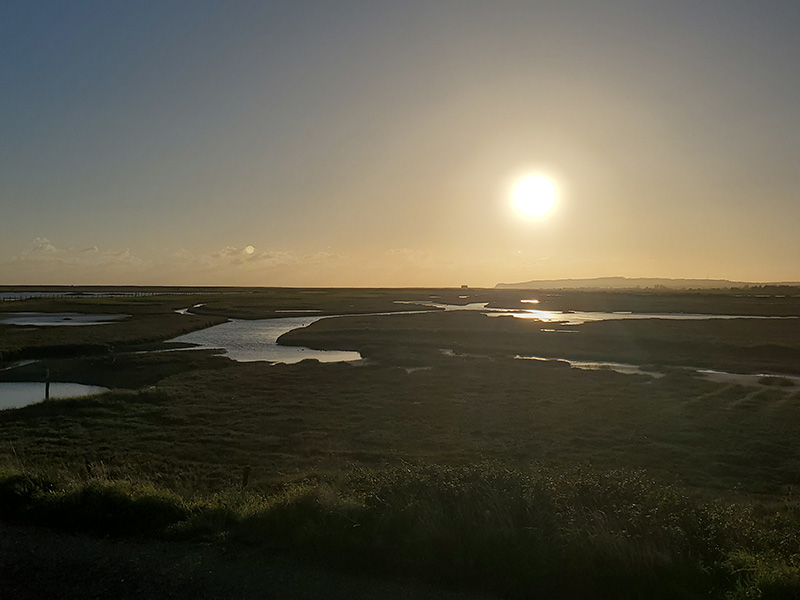
The saltmarsh habitat is created and maintained by a regular inflow of salty water from the river at high tide which then flows out again at low tide (which is how the bio-beads got onto the saltmarsh). This creates a mix of mud and hardy saltmarsh plants such as the Sea Purslane which are well-adapted to living in a saline environment with fluctuating water levels as the tide ebbs and flows. This type of habitat is rich in invertebrates and seeds which support large numbers of waders such as Redshank, which feed on invertebrates in the muddy areas, and wildfowl such as Wigeon which feed on the seeds in among the saltmarsh. Tragically the seeds so loved by Wigeon are identical in size to the bio-beads and it is reasonable to assume that many of the bio-beads will be eaten with unknown short and long term impacts. Only time will tell.
Wigeon feeding on saltmarsh © Barry Yates
This is a form of pollution we have never dealt with before, let alone an incident on this scale. The Sussex Wildlife Trust team have been learning and responding simultaneously, putting enormous pressure on a team who care so passionately about the reserve. We have already blocked off the sluice from the river to ensure no more bio-beads can get onto the reserve. We are also hoping to trial methods to remove as many of the bio-beads as possible.
At a time when our marine and coastal habitats are under threat like never before with ocean warming due to climate change, sewage discharges, sedimentation, sea level rise and more extreme weather events, the last thing we need right now is a serious pollution incident. It is hard to imagine anything positive to come out of a disaster on this scale. However, there is hope. Most encouragingly, yesterday it was clear that there has been an overwhelming public response to help clear up the beaches and make their frustration and anger known on social media. The local MP Helena Dollimore has been instrumental in raising the profile of the incident with Ministers and in Parliament. This has also been reflected in the work of organisations such as Strandliners, Nurdle, and Rother District Council. I have also met with Natural England, then Environment Agency and contractors who have all been universally supportive and keen to use their expertise to help clear up the bio beads both on our nature reserve and in the wider area.
The one organisation I have yet to meet is Southern Water but I hope to do so shortly. I would like to see them more actively supporting the clean up and taking urgent steps to ensure this never happens again.
From my visit I was left in no doubt this is a heartbreaking setback for our work. But we will rise to the challenge as we always do. This is an awful, tangible and very visible threat to our wildlife but the response of our supporters, the public and other organisations is an inspiring signal of the passion so many people share for the marine and coastal environment.
ITV Meridian visit Rye Harbour Nature Reserve
This post is also available on Sussex Wildlife Trust website

