
By Sarah Ward
Marine Conservation Officer
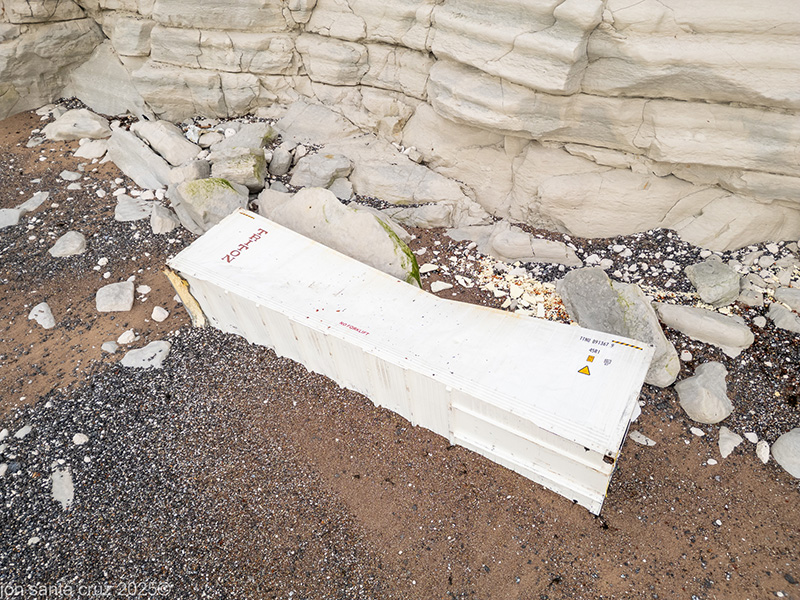
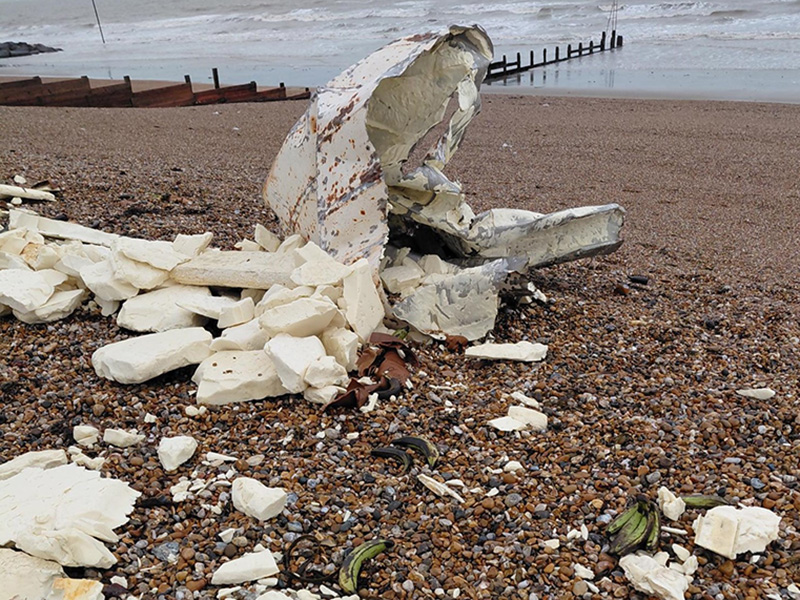
With three recent severe pollution events affecting the Sussex coastline and sea in the last couple of months, beach cleaners across the counties have been collecting huge amounts of all sorts of abnormal items, from tonnes of bio-beads to avocados, bananas, bags of onions and even frozen chips.
A huge well done to all those who have involved themselves in clean-up efforts – it’s incredibly important to remove these items from the environment and demonstrates how much communities and individuals care about their local beaches and sea. Our own volunteers have been out at West Beach in Littlehampton both before and after Christmas.
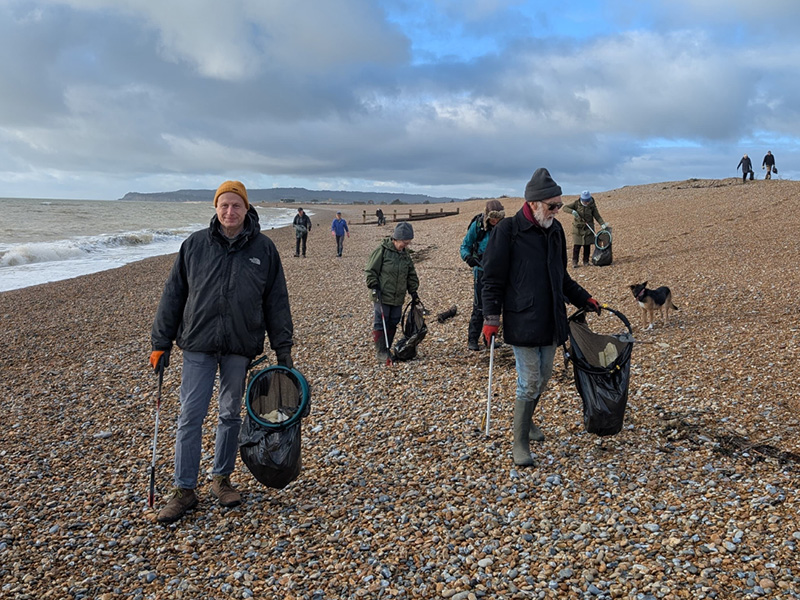
While these container losses might seem like freak accidents, the impact of these events has prompted us to act, both in terms of directing volunteers to get involved, and understanding how the policy around these accidents works. We may be familiar with the term ‘polluter pays’, but what does this mean in practice?
Shipping containers lost at sea have wide-ranging impacts. The contents of the containers will often find their way to beaches, but much of it remains at sea. Floating debris may cause an immediate hazard to other sea users, and in the longer term may continue to damage the marine environment.
New legislation means that shipping companies are legally required to report any losses; the containers are the legal responsibility of the vessel owner. Insurance policies will cover the loss of goods; this should also cover costs incurred by those cleaning beaches and removing containers.
Locally, this has been primarily Councils who have arranged contractors to deal with the removal of shoreline debris – we fully support calls for recovering all costs from the responsible parties. We would also like funds to be made available to environmental groups. These groups play a key role in cleaning up after these kinds of events and are committed to keeping their local blue and green spaces clean.
Loss or damage to biodiversity can also be a factor here, particularly if an affected area or habitat is protected. Proving environmental damage, however, is much more difficult, particularly if the whereabouts of the containers are unknown. When containers damage protected habitats at sea, it may be possible to take action against the vessel owner—but only if the containers are found and the damage can be proven.
Please see our webpage for information about how to get involved in volunteering with Sussex Wildlife Trust.
This post is also available on Sussex Wildlife Trust website

