

Back in December 2003, we collected some saplings of Sussex Black Poplar from Wakehurst Place and, with our team of volunteers, planted them out at Castle Water.
They have grown a bit since then and are now a haven for wildlife. In the photo above, two of our loyal volunteers, Ken Halpin (right) and John Baldwin, were planting the saplings, with a wire mesh rabbit guard and label of origin, near the reedbed viewpoint.
Sadly, Ken and John have both died since then, but we remember their contribution to our work at Rye Harbour Nature Reserve.
For over twenty five years, Sussex Wildlife Trust has been working in partnership with Wakehurst Place (Kew) and the Sussex Black Poplar Working Group to conserve the native black poplar tree (ssp betulifolia) and help prevent it from becoming extinct. click here for more detail.

This is what the saplings look like now, about 15m tall and they are a good place to look for some migrant woodland birds, such as Willow Warblers, Spotted Flycatcher and Redstart.

Last week I spent ten minutes looking at the leaves of the Black Poplars because they were speckled with a yellow rust fungus

looking closer at the rust pustules on the underside of the leaf

then, under another leaf there was also the mine of an insect that had fed and grown up beneath the leaf surface - it might be this micro-moth.

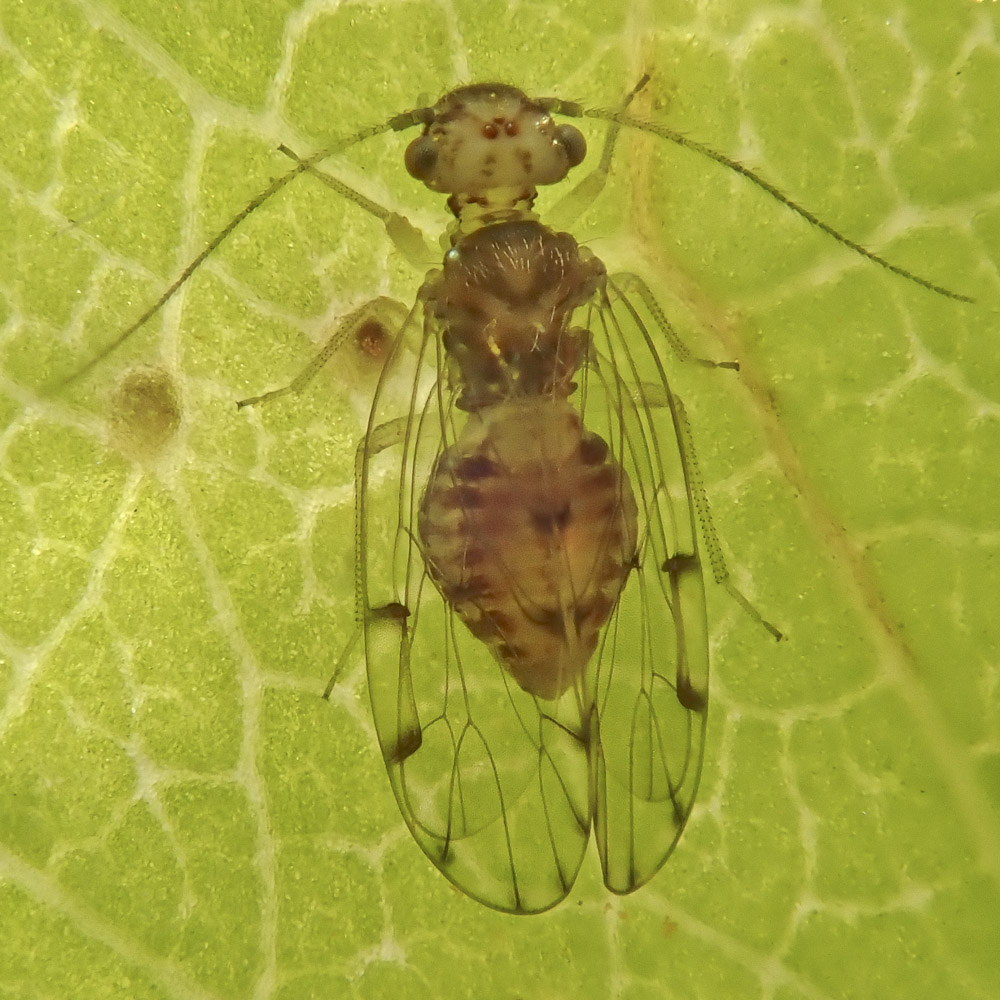
then an insect that at first looked to be an aphid, but (with the help of Bob, one of our regular visiting experts - remember this?) turned out to be a bark fly, probably Ectopsocus briggsi
Then another leaf had a curiously coiled stem and a bit of research found this is a gall created by the Poplar Spiral Gall Aphid - find out more about this very interesting insect here.

There are several useful books to find out more about plant galls - see here - but the most user friendly Britain's Plant Galls: A Photographic Guide by Michael Chinery.
So wildlife conservation is a long term project, it can be easy to do and with a little bit of close observation and detective work you can discover weird and wonderful wildlife all around you.
This post is also available on Sussex Wildlife Trust website

