
By Charlotte Owen
WildCall Officer
Every year, WildCall gets lots of phone calls from people worried about the frog spawn and tadpoles in their ponds. Here are some of the most commonly asked questions.
1. What type of spawn do I have?
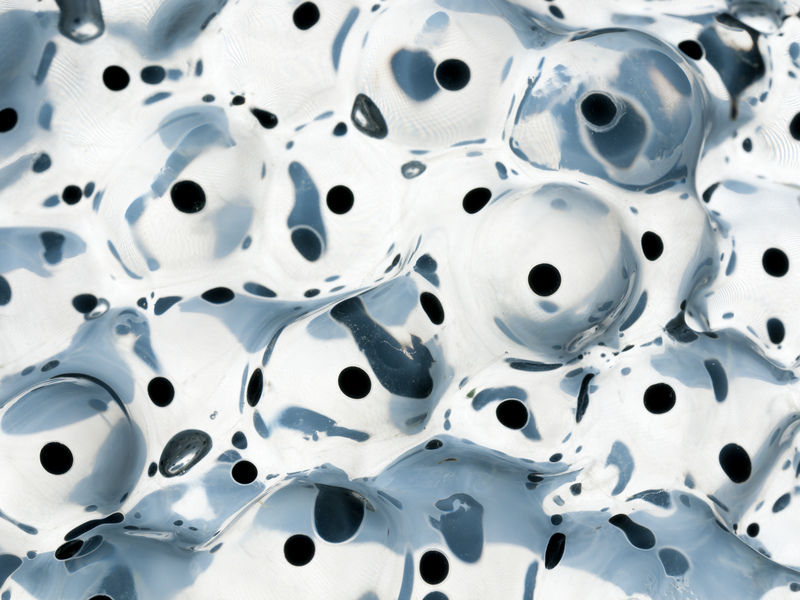
Frog spawn is always laid in big clumps, usually in shallow water. Toad spawn comes in long chains like a string of pearls and is usually laid in deeper water, draped over pond weed and submerged plants. Newts lay individual eggs on the leaves of pond plants.
2. I'm worried that I've got too much Frog spawn in my pond.
There really is no such thing as too much Frog spawn! Unfortunately it's a tough life for a tadpole: they have a lot of natural predators and are susceptible to various amphibian diseases, so female Frogs lay thousands of eggs each year with the expectation that only a tiny fraction will survive to adulthood.
3. My spawn hasn't developed properly.
This can be a tricky one. There are lots of factors that affect whether spawn develops: it may be to do with the Frogs or it may be to do with the pond. The most common cause of spawn failure is lack of light and late frosts. Frog spawn needs a lot of sunlight and a lot of warmth to develop properly, so shady ponds with deep water are not good for spawn.
4. Should I move the spawn into a separate pond?
We never recommend moving spawn or tadpoles between ponds as this can spread non-native plant species and amphibian diseases. There’s also a risk of moving spawn from the perfect Frog pond to one that is far less suitable. Ponds may contain a big black mass of writhing tadpoles but this is how it is meant to be. Just sit back and enjoy watching these amazing amphibians.
5. I've got lots of newts but no Frogs. Why?
Newts and Frogs are not mutually exclusive, but they do tend to have a bit of a boom-bust relationship. Newts eat Frog spawn and tadpoles, so a pond with a large population of newts will tend to have fewer Frogs. However, late-stage Frog tadpoles can eat newt tadpoles, so a pond with plenty of Frogs may not have many newts. They can co-exist if numbers are more balanced. It may be that your pond is just more suitable for newts than Frogs but this isn't a bad thing, and newt habitat is just as valuable as Frog habitat.
6. I’ve found Frog spawn in a puddle at risk of drying out – what should I do?
Frogs do often spawn in puddles and other temporary water bodies, which offer the ideal conditions of warm, shallow water. It can be a risky strategy but the hope is that the spawn and tadpoles will develop quickly enough to emerge as froglets before the puddle dries up.
We do not advise moving spawn or tadpoles between ponds due to the risk of transferring amphibian diseases, so it’s probably best to let nature take its course. If you want to give them a helping hand, you could rear some in a tank or bucket of rainwater, then release the froglets back where you found them. See our guide to rearing tadpoles for more information on how to look after them:
7. I’ve found a Frog/spawn in a bucket/watering can/unusual location – what should I do?
Frogs do sometimes spawn in strange places, especially if there isn’t a suitable pond nearby. Adults can become trapped in steep-sided containers, so it’s best to lift them out gently and place them in a patch of long grass or dense vegetation, where they are sheltered from the sun and safe from predators. If you do have a pond, you can move the Frog and/or spawn into the water. If you don’t have a pond, consider creating one – and in the meantime you can rear the spawn in a bowl, bucket or shallow tray of rainwater, placed in a sunny, sheltered position. See our guide to rearing tadpoles for more information on how to look after them.
Take Action for Wildlife
With so many species on the red list and at risk of extinction, we need to do all we can to stand up for wildlife. One of the best actions you can take to help is by joining us as a member.
This post is also available on Sussex Wildlife Trust website

